Duct Leakage Testing
Identifying hidden leaks before they become costly problems.
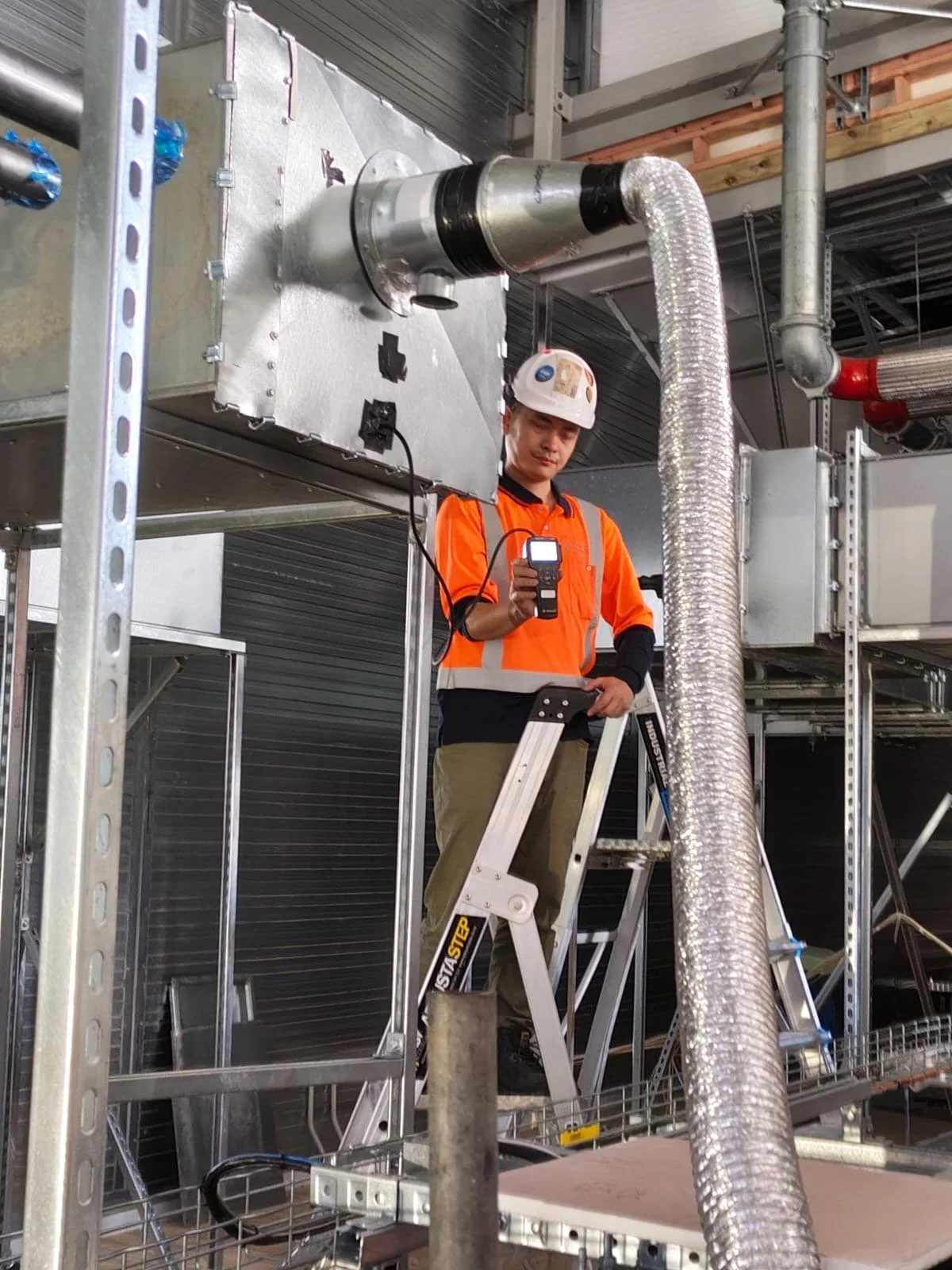
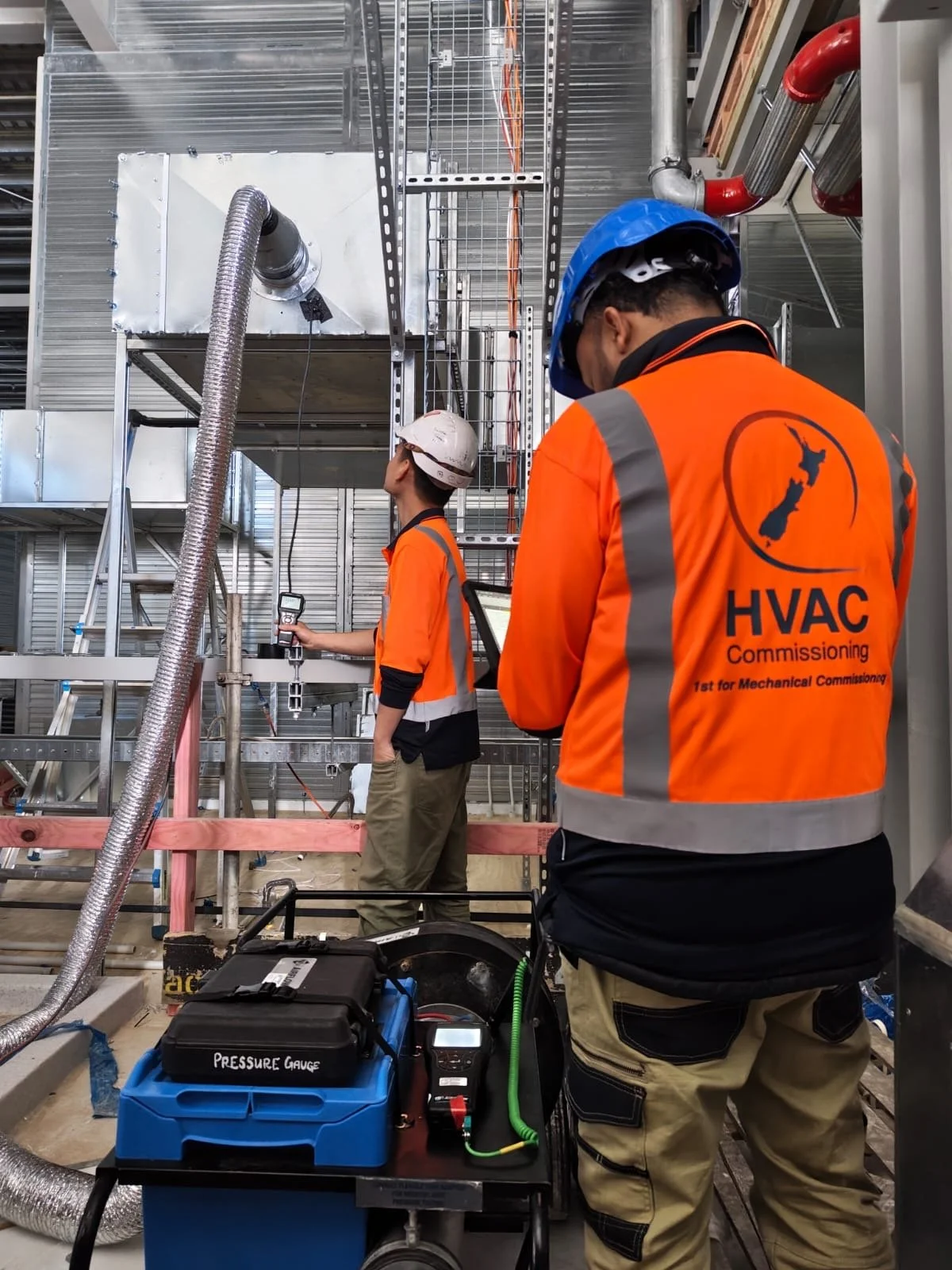
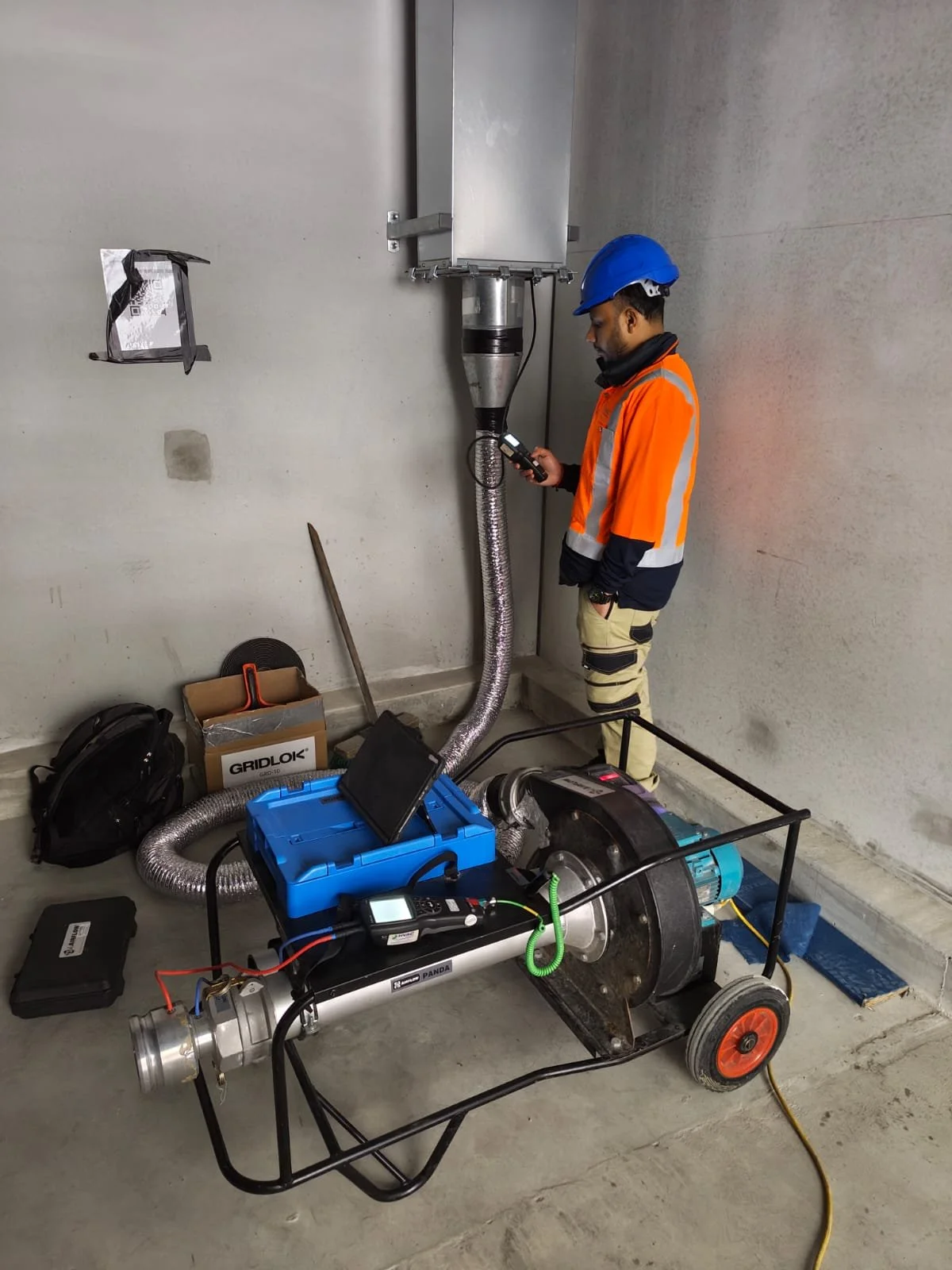
Duct leakage can significantly affect HVAC system performance and is often not identified until the final stages of a project. HVAC Commissioning has frequently encountered situations where a fan is unable to satisfy the design requirements of the spaces it serves, despite measured air volumes at the main traverse point exceeding the fan's specified duty. This discrepancy can indicate significant leakage within the ductwork system.
Identifying and rectifying these issues at such a late stage can be a costly and time consuming exercise. Rather than a single major leak, the problem often results from numerous smaller leaks throughout the system, which collectively contribute to substantial air losses. Locating and repairing these leaks once installation is complete can place considerable pressure on the project program and result in expensive remedial work to achieve compliance.
These issues can often be identified and addressed during installation through early duct leakage testing. However, testing requirements are frequently determined by the project specification, which may exclude low-pressure ductwork from leakage testing requirements. Consequently, contractors may not consider testing necessary where it has not been specified.
HVAC Commissioning’s experience with low-pressure ductwork testing has shown that leakage can frequently originate from the manufacture of the ductwork rather than the installation itself, although findings vary between projects. Common sources include seams, joints and Mez Flanges, highlighting the importance of assessing ductwork integrity beyond installation workmanship alone.
Even where duct leakage testing is not explicitly required by the contract documents, HVAC Commissioning strongly recommends that Mechanical Contractors and Main Contractors consider sample leakage testing across all ductwork pressure classes. Proactively testing a representative percentage of the ductwork helps identify potential deficiencies earlier, provides greater confidence in the quality of the installation and reduces the risk of costly issues emerging during the critical final stages of a project.